Mezzotint
How a mezzotint is made
Nearly all printmaking is additive. You start with a clean plate and put marks into it — bitten with acid, cut with a burin, scratched with a needle — and those marks are what print dark. Mezzotint reverses it. The plate is first roughened all over, until every part of it grips ink and the whole surface prints an unbroken black. Only then does the image begin, and it is made entirely by taking that black away.
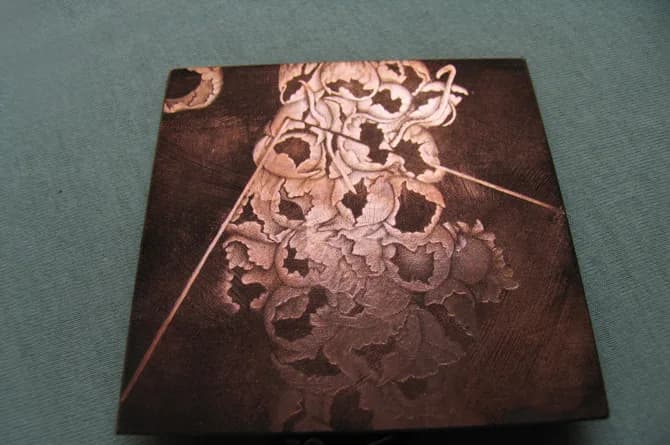
The photographs on this page follow one plate through it, from a sheet of polished copper to a print pencilled Square — mezzotint — Maja 2009.
- 1642
- Ludwig von Siegen pulls the first mezzotint. The rocker, the scraper and the burnisher have not much changed since.
- Dark to light
- The ground is laid first and the picture is taken out of it. Etching and engraving work the other way round.
- No undo
- A burr that has been flattened cannot be raised again. The plate only ever moves in one direction.
I
The plate
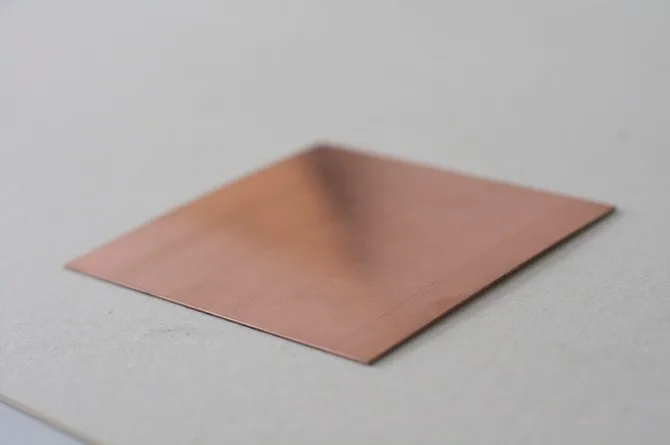
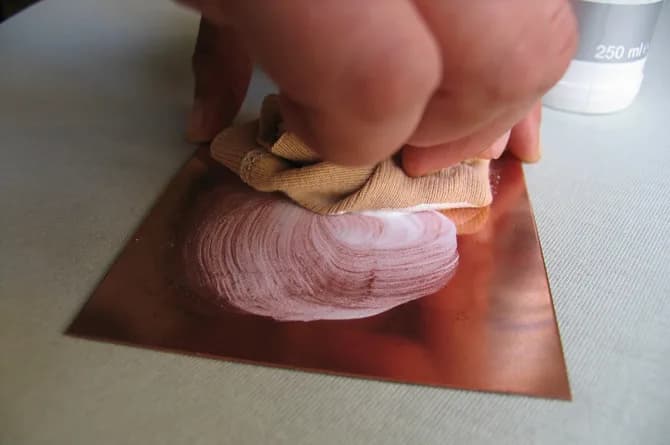
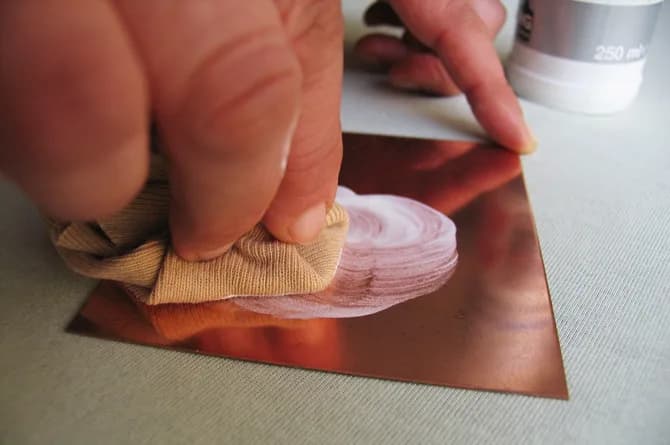
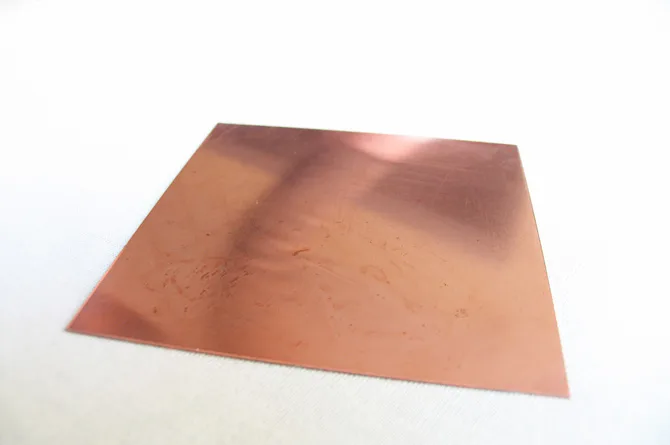
A sheet of copper, rolled flat and polished until it gives back a reflection. Before any work goes into it the surface is cleaned — a paste worked over the whole plate by hand, then rinsed off.
Copper takes a fingerprint. One left here would still be there at the end, sitting in the black as a patch that will not ink properly.
II
Rocking the ground
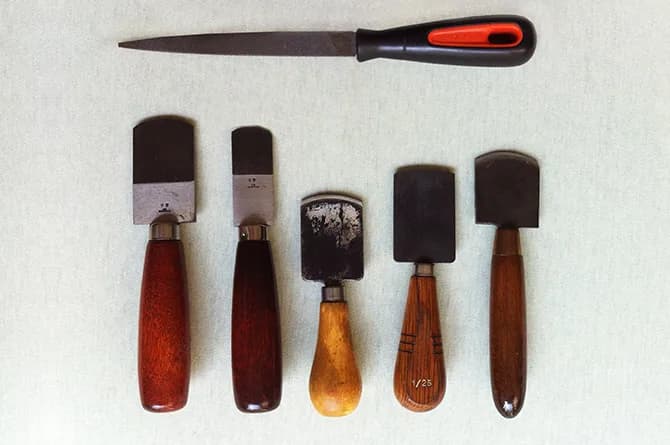
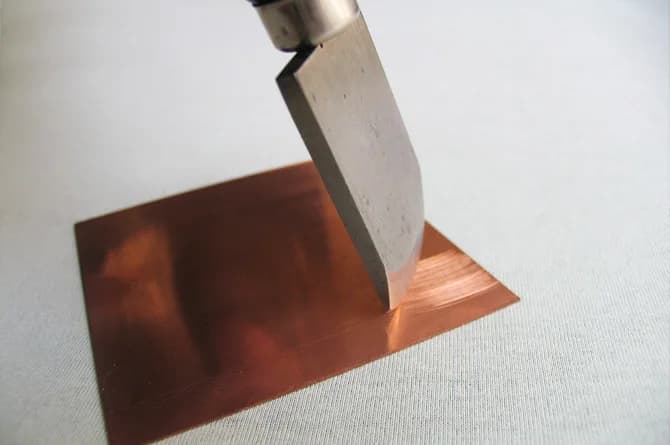
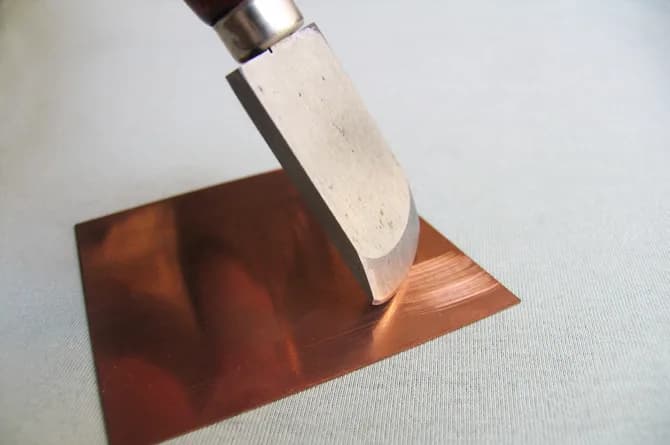
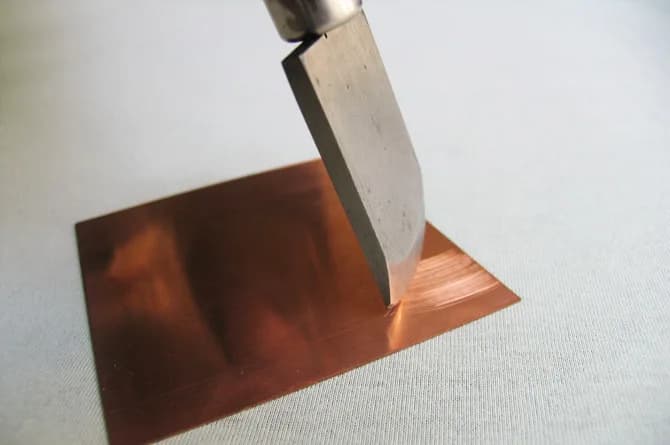
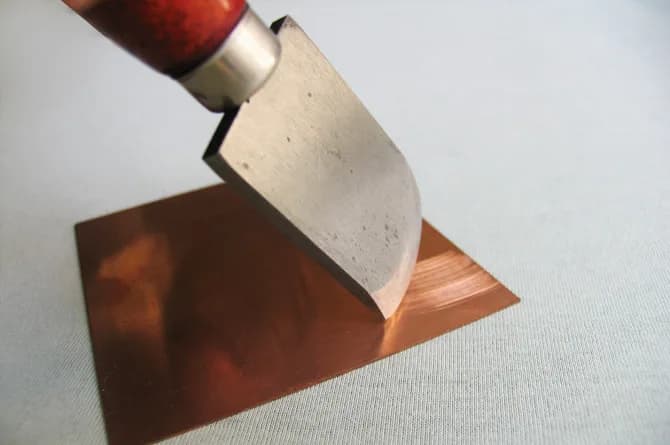
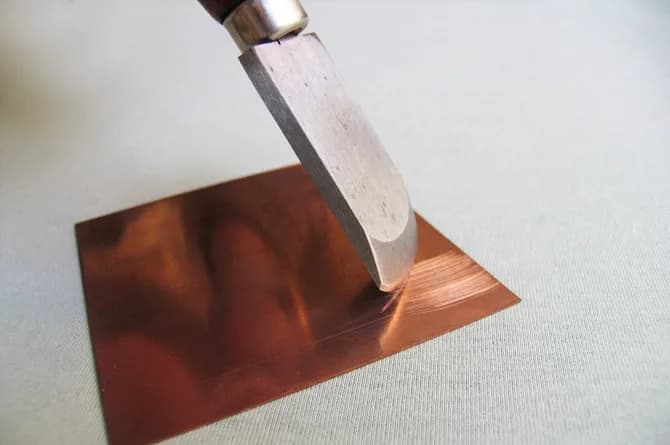
The rocker is a steel blade, curved along its edge and cut into teeth. Held upright and rocked from side to side, it walks forward across the copper, and every pass leaves a line of small pits with a burr of raised metal standing beside each one. Those burrs are what hold ink.
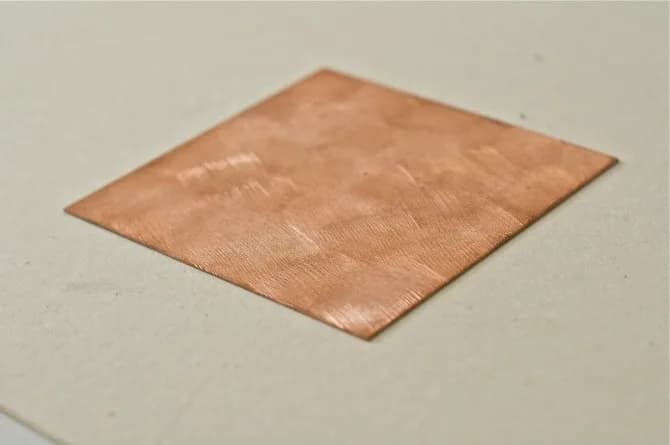
A single pass does almost nothing. The plate is turned and rocked again from a new angle, then turned and rocked again, direction after direction, until the burrs cover it evenly and no bare copper is left anywhere.
This is the longest part of the work and it is the part that never shows. None of it is the picture. It is only the black the picture will be taken out of.
01 / 05
III
The drawing comes late
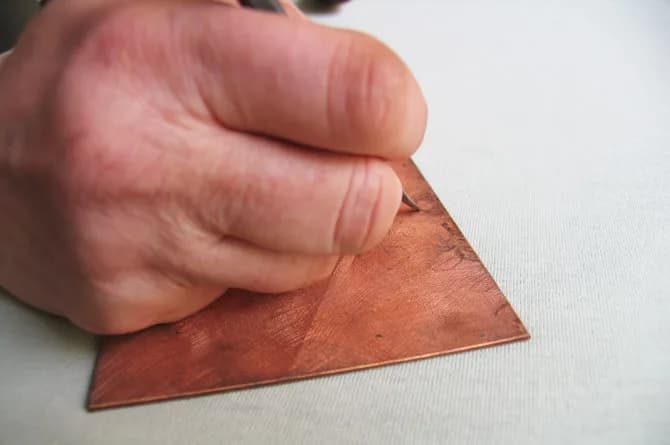
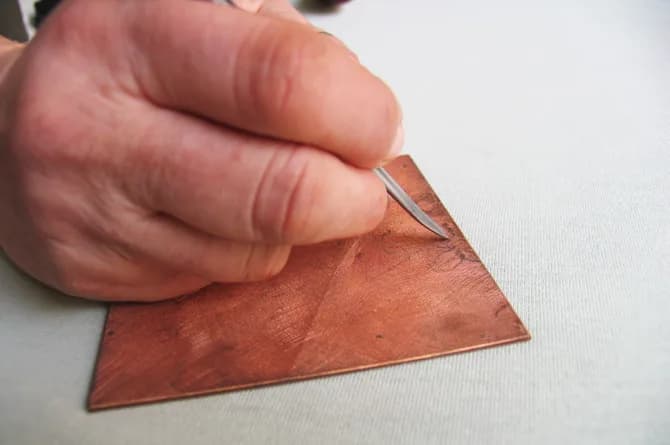
Only now does the picture come into it. The design is worked out on paper first, then laid over the plate and traced through carbon paper — lightly, because the ground is fragile and a heavy hand flattens the burrs that make the black.
What ends up on the copper is not really a drawing. It is a map of where the light is going to be.
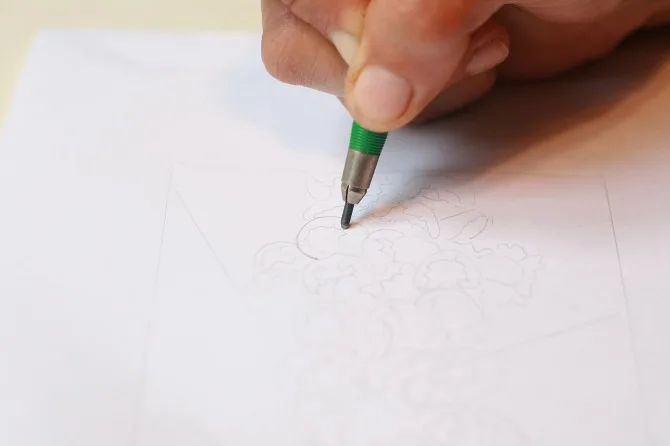
Worked out on paper.
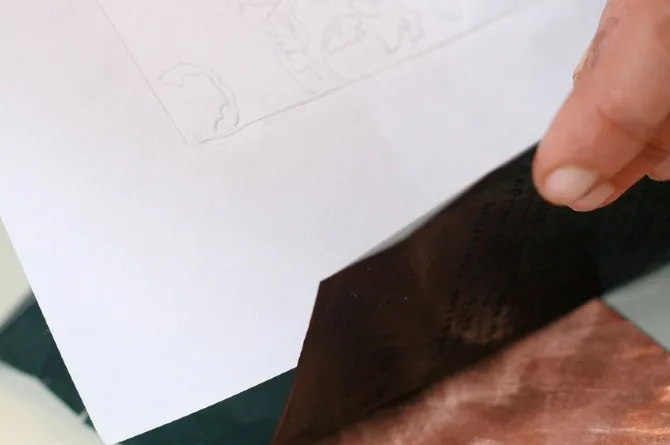
Traced onto the ground through carbon paper.
IV
Taking the light back
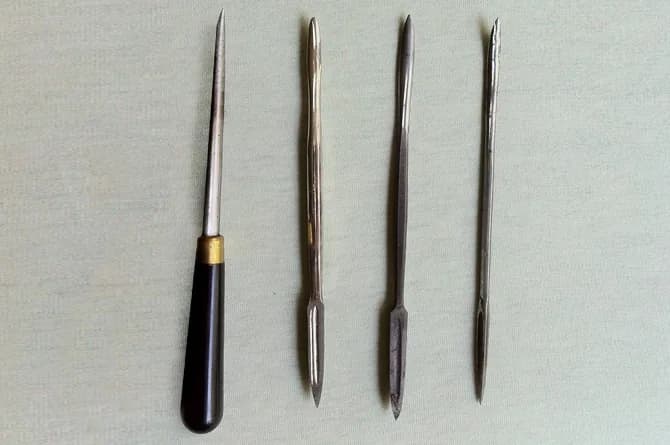
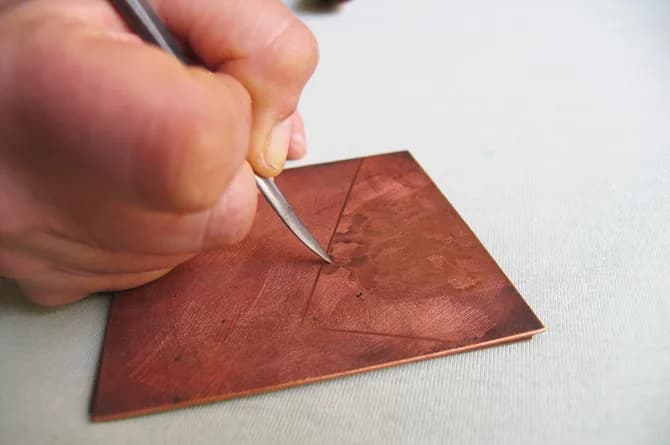
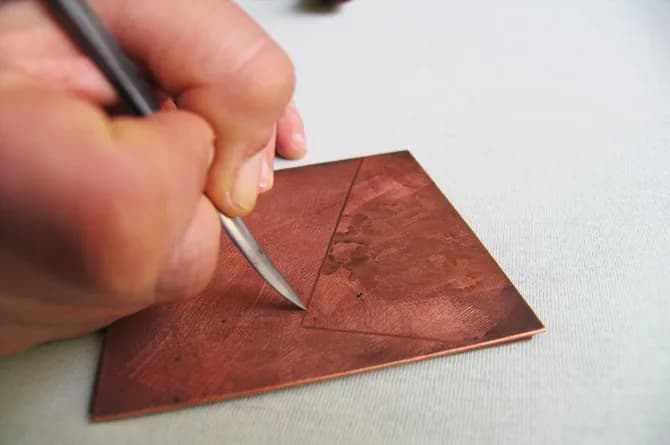
From here everything is subtraction. A scraper cuts the tops off the burrs: shorter burrs hold less ink, and less ink prints grey. A burnisher presses what is left flat and polishes the copper smooth again, and smooth copper holds no ink at all — that prints white.
Every tone in the finished print sits somewhere between those two, and the only way to reach one is to remove exactly the right amount. Nothing can be added back. A burr that has been flattened is gone; take a passage too far and it stays too far, or the whole area has to be rocked again from nothing.
V
State by state
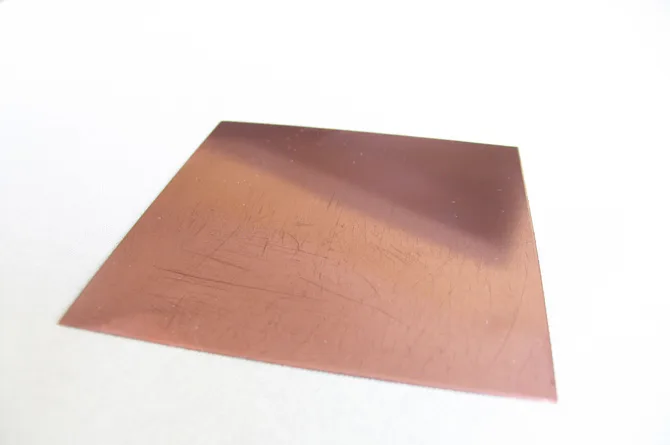
Six photographs of the same plate, taken as the work went on: bare copper first, then the ground going down over it, then the image coming back out of the ground.
Unusually for a printing plate, it reads as a positive. The bright, burnished passages are the ones that will print white.
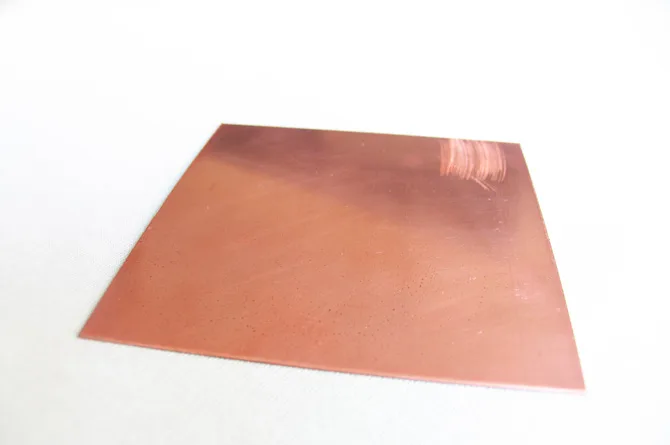
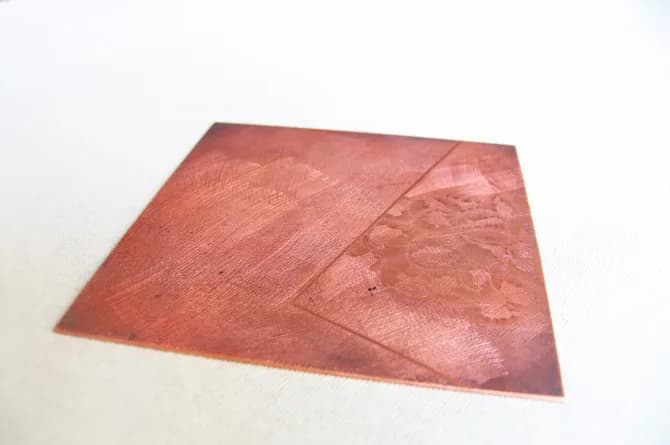
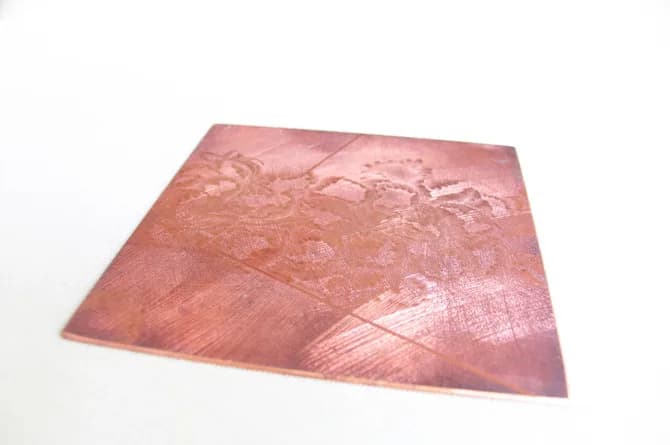
01 / 06
VI
Ink, pressure, paper
The plate is inked all over and then wiped back, so that ink is left only down in the pits and against the burrs. It goes through the press face to face with damp paper, under enough pressure to push the paper into every one of them and lift the ink out.
That same pressure flattens the burrs a little on every pass. A mezzotint plate wears out while it is being printed — which is why the editions are small, and why the earliest impressions are the deepest.
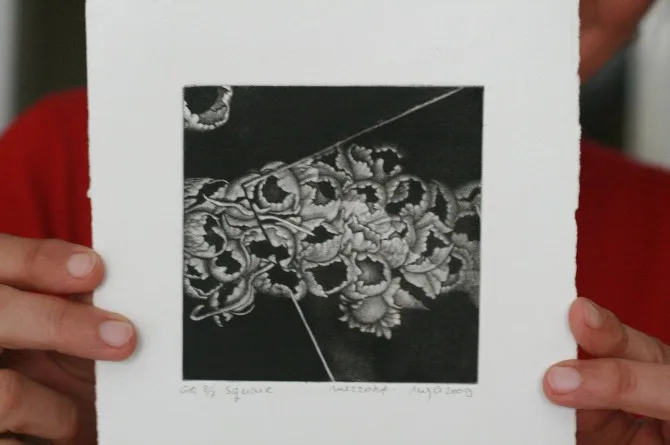
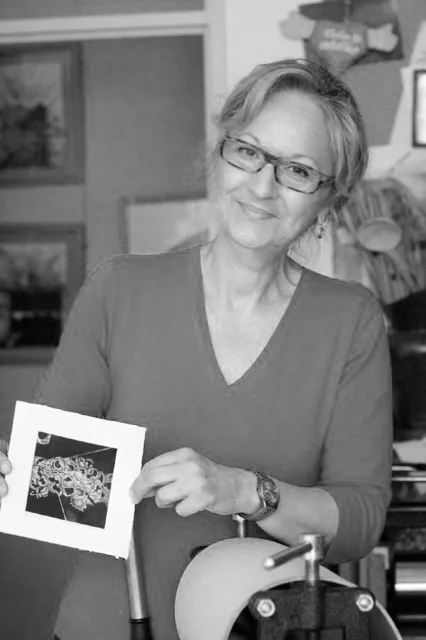
In the artist’s words
See the mezzotintsI try to express my impressions of the world, but leave it to you to discover, in a little bit of colour in the shadow of my black and white mezzotint, your own picture of this world and this life.